“Iqbal’s Human Ego: its Freedom and Immortality”

According to Allama Muhammad Iqbal, Ego (Khudi) is the ability of an individual which enables that individual to play an active, dynamic and free role in shaping and reshaping personal as well collective behavior.

Iqbal’s philosophy essentially revolves around the issue of the progression of human being, or the rise of the “self” or “ego” — the Iqbalian khudi…. in the direction of attaining exalted heights — the heights at which Almighty Allah (SWT) Himself begins to take the wishes, hopes, and aspirations of the human being into account before formulating His decree. Iqbal argues that khudi is the root of all existence, an entity which may appear to be perishable but which can attain immortality. The human ego or “I” has the potential of achieving permanence as an element in the constitution of the universe provided that it adopts a certain mode of life. The ego can evolve, progress, and succeed as well as degenerate, atrophy, and fail. The Qur’an puts these two possibilities as follows: “The one who causes this (self) to grow in purity has indeed attained success; and the one who is negligent of this (self) has indeed utterly failed” (AlShams 91:9, 10). The human ego has the ability to grow by absorbing the elements of the universe, of which it appears to be an insignificant part, as well as the ability to incorporate the attributes of Allah (SWT). Muslim Sufis have advised: “Create in yourself the attributes of Allah.” If the human ego is able to do this, it would become worthy of being the vicegerent of God on earth. Iqbal argues that the human ego has a central place in the universe, while it is, at the same time, intimately linked with the Ultimate Ego, or God Himself. Iqbal notes throughout the entire gamut of being runs the gradually rising note of egohood until it reaches perfection in man. That is why the Qur’an declares the Ultimate Ego to be nearer to man than his own neckvein. In order to reach these noble heights of perfection, the ego has to pass through three stages which Iqbal describes in Asrar-e-Khudi. These three stages can be seen as the different spiritual phases through which the ego has to pass in its journey of spiritual ascension: Ita‘at, or obedience to the Divine Law; Dabt-e-Nafs, or self-control, which is the highest form of self-consciousness or egohood; Niyabat-e-Ilahi, or the vicegerency of God.

Iqbal distinguishes between two aspects of the Self, the efficient and the appreciative. The efficient self is that which is concerned with, and is itself partially formed by, the physical world. It apprehends the succession of impressions and discloses itself as a series of specific, and consequently numerable states. The appreciative self is the deeper self, of which one becomes aware only in moments of profound meditation when the efficient self is in abeyance. The unity of the appreciative self is that in it, each experience permeates the whole. The multiplicity of its elements is unlike that of the efficient self. There is change and movement, but this change and movement are indivisible; their elements interpenetrate and are wholly non-serial in character. Corresponding to the two aspects of the Self are the two levels of time, serial time and pure duration. Serial time is spatial or clock time, whereas pure duration is a ceaseless continuous flow in which all things live and move and have their being. As human beings perfect their ego-hood, they cast off the girdle of serial time and gain a measure of eternity. Iqbal believes ardently that human beings are the makers of their own destiny and that the key to destiny lies in one’s character. He constantly refers to the Qur’anic verse, ‘Verily God will not change the condition of a people till they change what is in themselves’ (Surah 13: 12). Humanity’s mission on earth is not only to win greater freedom but also to gain immortality, which according to Iqbal: ‘is not ours by right; it is to be achieved by personal effort. Man is only a candidate for it’ (Iqbal 1930: 119).
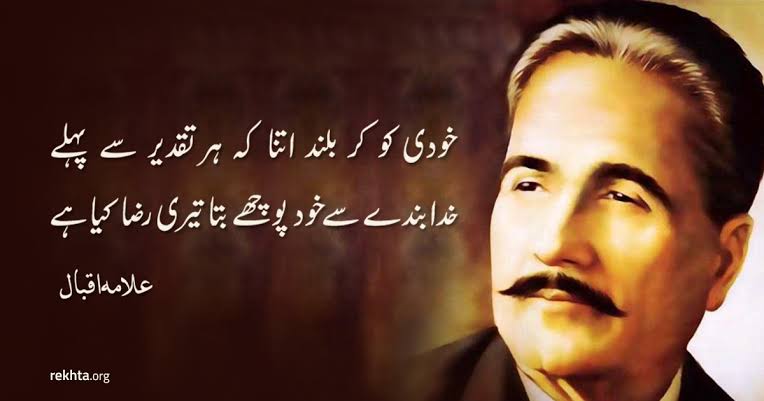
For Iqbal freedom is the Summum Bonum of human existence. A deep analysis of his conception of freedom, as elaborated in his poetry and philosophical writings, may justifiably lead us to the conclusion that in his thought freedom is the source of all values. He maintains that the life of ego is possible in freedom only. In one word, “life is an endeavor for freedom.” In his ‘Reconstruction of Religious Thought in Islam’ Iqbal holds that “there are only ego-sustaining and ego-dissolving 2 acts.” And freedom, in its strict sense, sustains the ego. No Muslim Philosopher, before Iqbal, had given the highest position to freedom in the hierarchy of values. For him freedom is not only a value or mode of human existence, it is, as stated earlier, the very life of ego. In the philosophy of Iqbal, man’s Khudi, with its basic and significant qualities freedom and creativity is the force that creates itself as well as the world. Freedom and creativity are the outstanding qualities which human ego unfolds to shape and mould its particular historic situation according to its aspirations. Creativity and freedom are interconnected, since the act of creation requires freedom. Freedom is the source of all values and in the real sense of the word, it is the life of ego. “Regarding freedom and creativity Iqbal has alluded to various Qur’anic verses in his Urdu and Persian poetry. In the Reconstruction of Religious Thought in Islam, he specifically dealt with this issue. In his fourth Lecture, The Human Ego—His Freedom and Immortality”, Iqbal presents significant themes from the Qur’an: Man being a vicegerent of God, a chosen entity and “the trustee of a free personality which he accepted at his peril. “Iqbal argues that man’s freedom and creativity, at the early stage of life, must be under the control and guidance of Law that may teach him to abide by certain moral principles: The greatest obstacle in the way of life is matter, Nature; yet Nature is not evil, since it enables the inner powers of life to unfold themselves ‘The Ego attains to freedom by the removal of al l abstractions in its way. It is partly free, partly determined, and reaches full freedom by approaching the Individual who is most free —-God.

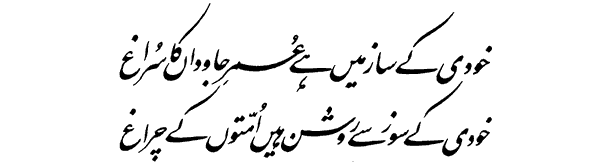
According to Iqbal, God has created everything that is in Heavens and earth for His Vicegerent man. Human being is free at his will to make use of all that has been bestowed on him by his Supreme Creator (Allah). But this worldly material life is not his ultimate destiny. It only paves the way that leads towards the higher life. Man’s aim, according to Iqbal, must be nearness to God, who alone is the source of his freedom. By exercising his freedom and creativity he can conquer the material world and reach fuller freedom through approaching God, who is Absolute Freedom, In brief, man’s highest achievement or distinction, according to Iqbal, does not li e in seeking self-negation or detachment from the material world and in the annihilation of his egohood in the Ultimate Reality (fana fi Allah). Iqbal says about the immortality of ego in his poetry that;
“Inequality: A Major Problem of Pakistan”

Inequality refers to the difference in size, degree and circumstances etc. It is the lack of smoothness and regularity. It refers to the rational processes in society that have the effect of limiting or harming a group’s social status, social class and social circle. The patterns of ineqaulity include gender inequality, education inequality, health inequality, radical and ethnic inequality, economic inequality, social, political, cultural and so on – and all work in conjuction to make it pervasive.

Similar to a series of other countries of the world, the problem of inequality is at peak in Pakistan too. It can be said that the factor of inequality has become the compulsory characteristics of almost all the deperatments and institutions of the country. In this article, I would try to highlight inequality in some of the prominent departments of Pakistan.

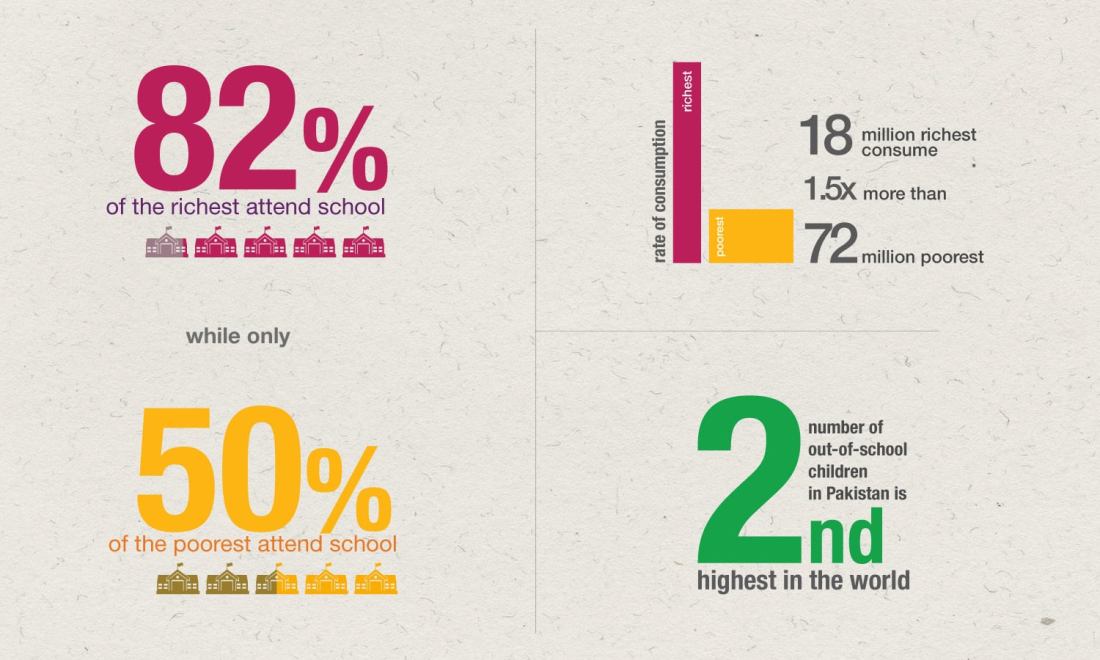
In Pakistan the 18 million richest people’s total consumption is 1.5 times more than the poorest 72 million people. Oxfam’s study shows that 40 per cent of sons born to the bottom quintile father remain in the bottom quintile; only 9 percent make it to the top quintile while 52 per cent sons born to rich remain rich.

Similarly 82% of the richest attend the school while the attendance of poorest in the school is only 50%.

Pakistan ranks last in women participation in the work force among the South Asian Association for Regional Cooperation (SAARC) countries – Oxfam study: Multiple Inequalities and Policies to Mitigate Inequality Traps in Pakistan (March 2015) “Women comprise 42pc of the total family labour.” According to government figures, the female labour participation rate is 18 per cent, compared to 71 per cent for men. What’s even more unfortunate, women own less than 3 per cent of the land and those who do have little control over it despite being such a strident force.

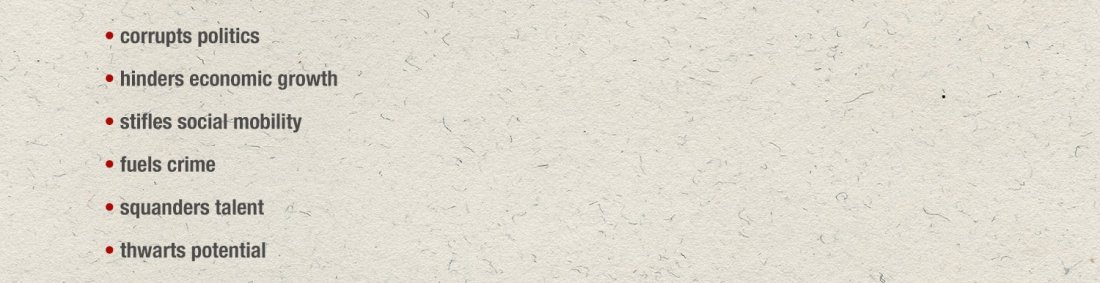
Inequality and disrimination always lead to disgrace snd disasters. Extreme inequality pervading in societies hurts all of us and makes getting out of the quagmire of poverty all the more difficult. Social scientists say inequality..

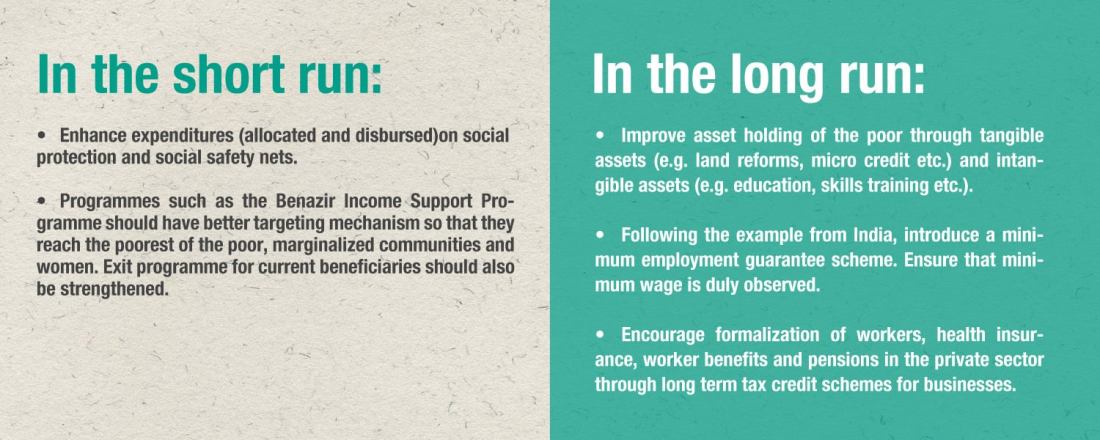
According to Islamabad-based think tank, the Sustainable Development Policy Institute’s deputy executive director, Dr Vaqar Ahmed, the government can reduce inequality.

THANKS

“Pashtoons and Afghans”

Several people, often consider Passhtoons and Afghans as one. They blend them with each other by neglecting and avoiding the differences between them and vanishing thier identities. But in fact, they are not one. There is a clear and major difference between the two. “Pashtoons constitute a nation while Afghans constitute a state”.

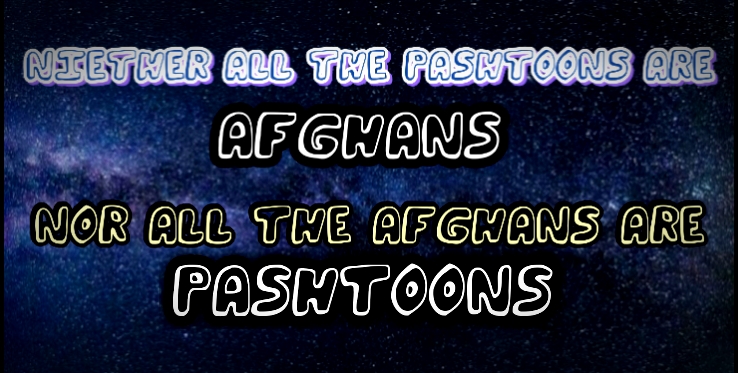
It is a universal fact that nationalism is not restricted by boundries while citizenship is. Keeping in view the truth, it can be derived that Pashtoons may be anywhere in any of 193 states of the world but Afghans must be the citizens of Afghanistan. That’s why niether all the Afghans are Pashtoons nor all the Pashtoons are Afghans.

Most of the people are also of the view that Pashtoons and Pashtoonwali are only related, restricted and rooted in Afghanistan but they aren’t. If the fact is so, Then Who were Pashtoons before the creation of Afghanistan? Where were Pashtoons before the creation of Afghanistan? Were the ancestors of Pashtoons decsended after the emergence of Afghanistan? Did the origination of Pashtoons occured after the creation of Afghanistan? No, no. The fact is not so.

Pashtoons have thier own identity and Afghans have thier own. Pashtoons were present before the creation of Aghanistan but Afghans emerged with the emergence of Afghanistan. Pashtoons were/are/will not be restricted by boundries and geographies but Afghans were/are/will. The identity of Pashtoons is lineless and timeless but the identity of Afghans is spaciotemporal and is assosiated with the geography of Afghanistan. Pashtoons were pashtoons before the creation of Afghanistan, are Pashtoons after the creation of Afghanistan and will be Pashtoons after the collapse of Aghanistan. They were/are Pashtoons in Arab, they were/are Pashtoons in Ajam but the thesis is reverse in the case of Afghans. Shortly, A Pashtoon may be the citizen of any state of the world but an Afghan must be the citizen of Afghanistan.

The major misconception and misconstruction in thier blend-up is that people mostly think that Pashtoons were exclusively and primarily breathed in Afghanistan but the fact is reverse. Afghanistan has not given birth to Pashtoons but Pashtoons have given birth to Afghanistan.

Shortly, it can be concluded that the inhabitants of the state of Afghanistan are Afghans including Pashtoons, Hazaras, Uzbeks, Tajiks, Turkmens, Aimeks, Nuristanis, Durrani, Pashayi Ghilji etc. But Pashtoons, regardless of boundries, constitute a nation and may be Pakistani, Afghanistani, American, Italian or French etc.

THANKS

“Teachers and Cheaters”

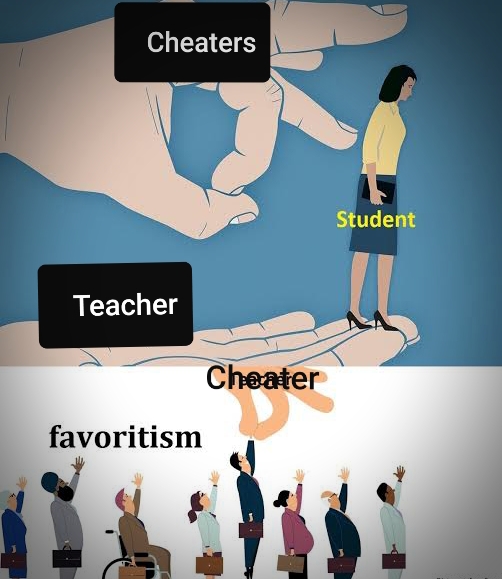
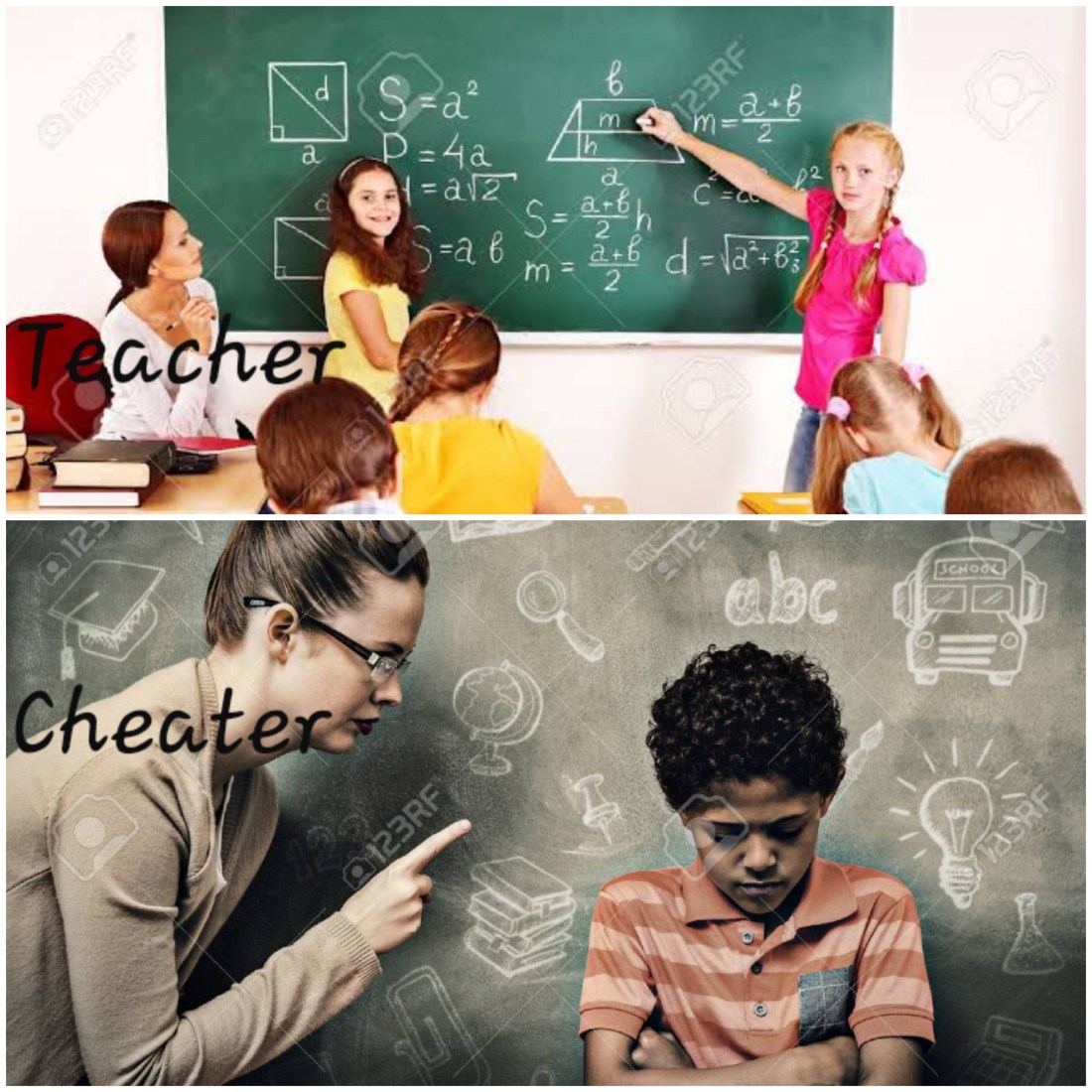
Teaching is a noble prophetic profession. A good teacher can inspire hope, ignite the imagination and instill a love of learning. It is truly said that “teaching is the profession that creates all the other professions.” Meanwhile, there are also numerous people who are hypocratically pretending as teachers. But infact, they are cheaters. Who are struggling to target students, decieve students, rape the ideas of students, demolish the character of the students and put extra-burdens on students.

It is a universal fact that excess of every thing is bad and dicriminationation always lead to disaster. But despite the facts, some cheaters are using their powers excessively, immorally, unethically, unequally and illegally. They are discrimanating students on personal likes and dislikes, ethnic basis, religiuos basis or gender basis. In other words, due to the excessive excercise of power, nepotism and favoratism they are harming the holy profession of teaching.

Teachers always encourage debates, discussions, logical reasonings and academic opposotions. They apprecaite and try to answer the questions raised by students. But the cheaters always discourage logical reasonings and discussions. They consider themselves hegemones and try to degrade the students raising questions. In other words, it can be said that they oppose criticism and impose their defective ideas upon students.

Teachers are cosidered as spiritual parents. A good teacher always appreciate and acknowledge the good behaviours, true ideas and brilliant deeds of students. But a cheater always remain rude to students, feel jealiousity with the true ideas and brilliant deeds of students.

A good teacher takes care and makes sure the liberty of students and tries to encourage them. But a cheater always keep sealled the tongues of students, dipriving them from freedom of expression and liberty of exchange of ideas. Which is a deadly act for the profession of teaching and a red question mark on liberty of students.

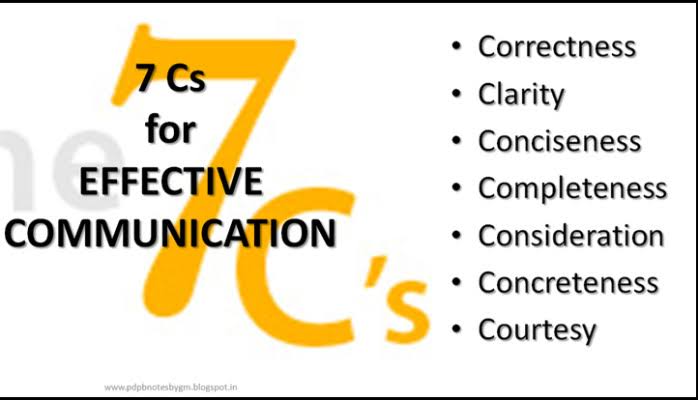
A good teacher, while teaching, takecares of 7Cs of effective communication and teaches the students with spirit, relevancy and interest. While a cheater partially or even completely ignores the utilization of 7Cs and always use to discuss the materials of own interest, capturing the ideas of students and then using them for own purposes.

There is long list of differences between teaching and cheating. But I would shortly conclude that teaching is prophetic profession while cheating is a devilish profession. Teachers polish students while cheaters demolish students. Teachers accomplish students while cheaters suppress students.

Cheaters are like black dirty spots on clean white dress. They are harming the holy identity of teachers. Therefore, I would suggest that there must be proper check-up, monitoring and servays regarding the discrimination of teachers and cheaters. There must be proper policies for the eridication of cheaters from the system. There must be proper planning for the elimination of cheaters from the holy profession.

THANKS


Life is not a Bed of Roses

Life is not a bed of roses, it is full of difficulties, those who meet, treat and try to defeat the hardships always succeed. Because, infact, the nature is working on the principle of give and get. “There is no gain without pain.

No pain, No gain

The way to success always passes through difficulties. To get the pearl at the bottom of the river one must know to swim and dare to sink. To reach the sky one must know to fly. To win the race one must know to run because a dream does not turn into reality through magic but it needs sweat, determination and hardwork.

Dreams don’t work, unless you do

Hardwork and firm determination lead to success. That’s why continuous dripping of soft water can pierce through a strong stone. It’s impossible to become Albert Einstein, Allama Iqbal, Newton or Shakespeare over night, rather it requires hardwork. Thomas Edison succeeded after conducting thousand times repeated experimentation of more than 3000 designs for inventing a bulb.

There are hardships in way of success

The hardworkers are always winers because life is a farmfield, not a bed of roses and it only let those to succeed who realise and utilize their abilities. There is no glory without frazzle, no rose without thorn and no happiness without woes. Difficulties are like the gaurds of success and success is like the servant of struggle. That’s why the dufficulties mastered are always the opportunities won.

THANKS