
Inequality refers to the difference in size, degree and circumstances etc. It is the lack of smoothness and regularity. It refers to the rational processes in society that have the effect of limiting or harming a group’s social status, social class and social circle. The patterns of ineqaulity include gender inequality, education inequality, health inequality, radical and ethnic inequality, economic inequality, social, political, cultural and so on – and all work in conjuction to make it pervasive.
Similar to a series of other countries of the world, the problem of inequality is at peak in Pakistan too. It can be said that the factor of inequality has become the compulsory characteristics of almost all the deperatments and institutions of the country. In this article, I would try to highlight inequality in some of the prominent departments of Pakistan.
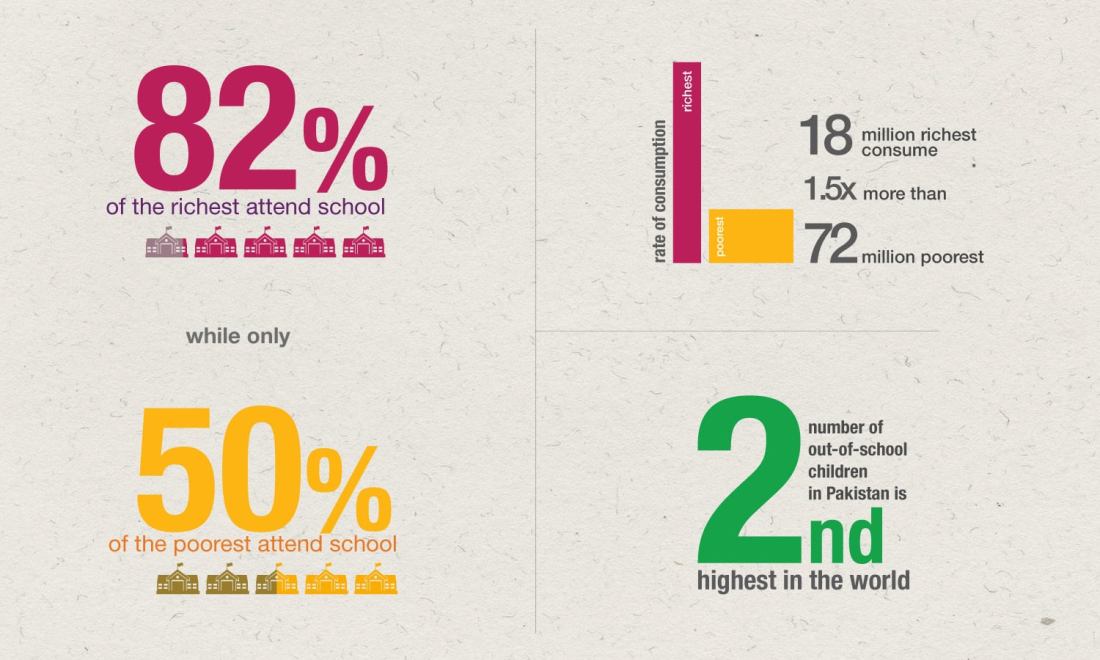
In Pakistan the 18 million richest people’s total consumption is 1.5 times more than the poorest 72 million people. Oxfam’s study shows that 40 per cent of sons born to the bottom quintile father remain in the bottom quintile; only 9 percent make it to the top quintile while 52 per cent sons born to rich remain rich.
Similarly 82% of the richest attend the school while the attendance of poorest in the school is only 50%.
Pakistan ranks last in women participation in the work force among the South Asian Association for Regional Cooperation (SAARC) countries – Oxfam study: Multiple Inequalities and Policies to Mitigate Inequality Traps in Pakistan (March 2015) “Women comprise 42pc of the total family labour.” According to government figures, the female labour participation rate is 18 per cent, compared to 71 per cent for men. What’s even more unfortunate, women own less than 3 per cent of the land and those who do have little control over it despite being such a strident force.
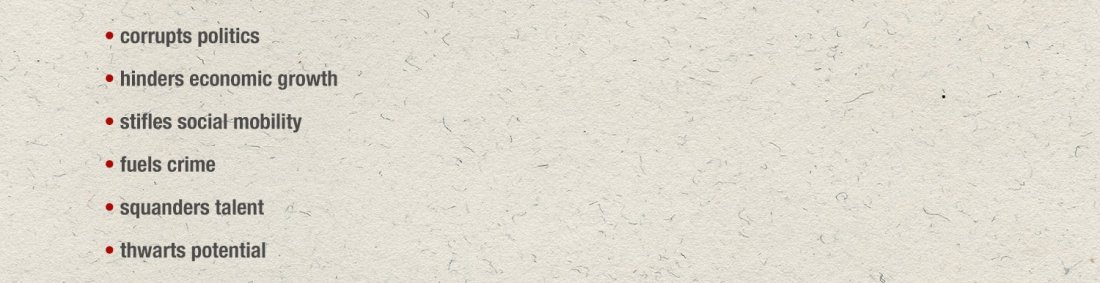
Inequality and disrimination always lead to disgrace snd disasters. Extreme inequality pervading in societies hurts all of us and makes getting out of the quagmire of poverty all the more difficult. Social scientists say inequality..
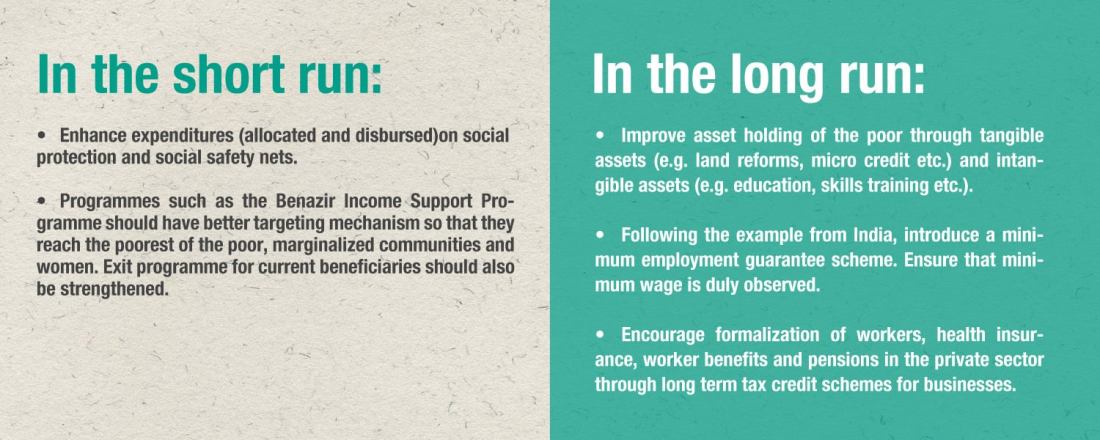
According to Islamabad-based think tank, the Sustainable Development Policy Institute’s deputy executive director, Dr Vaqar Ahmed, the government can reduce inequality.
THANKS
 Amjad's Blogs